NATIONAL WWI MUSEUM AND MEMORIAL
ISLE OF
SAINTS &
SOLDIERS
SAINTS &
SOLDIERS
Ireland and the Great War
While Ireland contributed over 200,000 soldiers to the British war effort, the country simultaneously experienced growing nationalist movements and conflict at home. Through personal stories, artifacts, and interactives, discover how the Great War became a catalyst for Ireland's complex journey toward independence.
A TEMPORARY EXHIBITION • FALL 2026 – 2028
01Isle of Saints and SoldiersIntro • 36″×84″
PART ONE
UNDER
THE LION’S
PAW
THE LION’S
PAW
Ireland, 1914

Sir Edward Carson inspecting the Ulster Volunteer Force, 1914. Imperial War Museum. Public domain.
The island stands divided and anxious. The long-promised Home Rule Act has arrived, but instead of unity, it brings crisis. Protestant Ulster arms itself against “Rome Rule,” while Nationalists rally to the Irish Volunteers. Civil war looms — until Britain declares war on Germany, and Ireland's local crisis is swept into a global conflict.
SECTION ONE
02Under the Lion's PawIntro • 36″×84″
THE CRISIS
HOME
RULE
RULE
For decades, Irish nationalists fought for self-governance within the British Empire. The Third Home Rule Act, passed in 1914, promised Ireland its own parliament — but its implementation tore the island apart before it could take effect.
“The democracy of Ireland will be tested in this crisis. I say to the Government: trust the Irish people.”
— JOHN REDMOND, IRISH PARLIAMENTARY PARTY

Sir Edward Carson, 1914. John George Day. Public domain.
In August 1914, just as Ireland seemed about to erupt, Britain declared war on Germany. The Home Rule Act was suspended “for the duration of the war” — and Ireland's fate was bound to a conflict thousands of miles away.
1.1
03Home RuleMontera • 23″×84″
PARAMILITARIES
ARMED
& READY
& READY
ULSTER VOLUNTEERS
100,000 strong. Protestant. Loyal to the Crown. Armed with 25,000 rifles smuggled from Germany at Larne.
VS
IRISH VOLUNTEERS
180,000 strong. Nationalist. Fighting for Home Rule. Armed with 1,500 rifles landed at Howth in July 1914.
Both sides drilled openly. Both smuggled weapons. Ireland stood on the brink of civil war. The Curragh Mutiny of March 1914 saw British officers refuse orders to move against Ulster — revealing where the army's true sympathies lay.
On July 26, 1914, British soldiers fired on civilians at Bachelor's Walk, Dublin — killing three and wounding dozens. The massacre radicalized a generation.
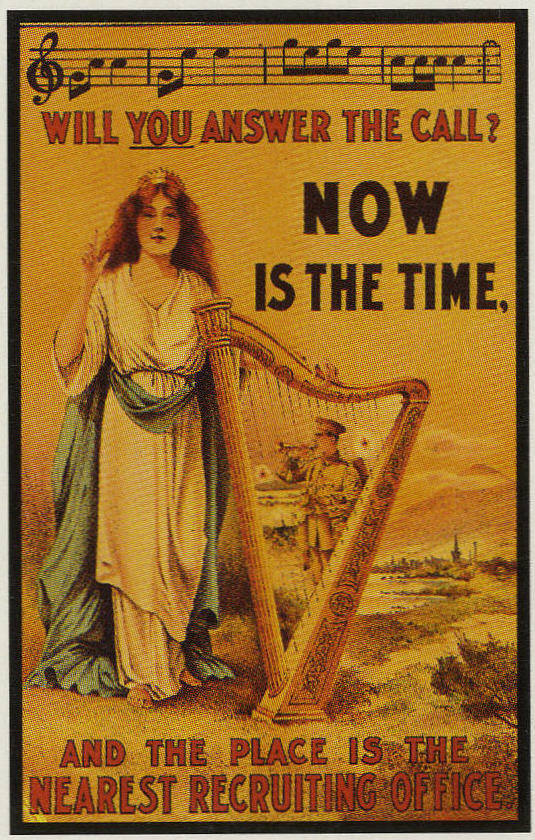
“Will you answer the Call?” Irish recruitment poster, 1915. Public domain.
1.2
04Armed and ReadyMontera • 23″×84″
PART TWO
INTO THE
CAULDRON
CAULDRON
1914 – 1916

“The Call to Arms. Irishmen don’t you hear it?” David Allen & Sons, Dublin, 1915. Library of Congress. Public domain.
Over 200,000 Irishmen enlist in the Great War. Some for adventure, some for money, others out of loyalty or hoping war service will secure Home Rule. Irish regiments suffer horrific losses at Gallipoli and the Somme, while on the home front, Belgian refugees arrive, U-boats threaten famine, and women step into new roles.
SECTION TWO
05Into the CauldronIntro • 36″×84″
ENLISTMENT
WHY THEY
FOUGHT
FOUGHT
Irish men enlisted for as many reasons as there were recruits. No single motive explains why 200,000 chose the King's uniform.
FOR HOME RULE
“Fight for the freedom of Belgium — and Ireland's freedom will follow.” John Redmond's promise drove thousands to enlist.
FOR KING & EMPIRE
Ulster unionists saw service as proof of loyalty. The 36th (Ulster) Division formed almost entirely from the Ulster Volunteer Force.
FOR SURVIVAL
A soldier's pay of one shilling a day was more than many laborers earned. Separation allowances kept families fed.
FOR ADVENTURE
“It'll be over by Christmas.” Young men left farms and factories, eager to see the world before it was too late.
Irish communities worldwide also rallied — fighting for the Commonwealth in Australia, New Zealand, and Canada.
2.1
06Why They FoughtMontera • 23″×84″
BATTLE
BLOOD
SACRIFICE
SACRIFICE
GALLIPOLI
APRIL 1915 – JANUARY 1916
The 10th (Irish) Division landed at Suvla Bay. Over 4,000 Irish casualties in a doomed campaign against the Ottoman Empire.
THE SOMME
JULY 1 – NOVEMBER 1916
The 36th (Ulster) Division suffered 5,500 casualties on the first day alone. The 16th (Irish) Division followed at Guillemont and Ginchy.
MESSINES RIDGE
JUNE 7, 1917
The 16th and 36th Divisions fought side by side for the first and only time — Nationalist and Unionist, shoulder to shoulder.
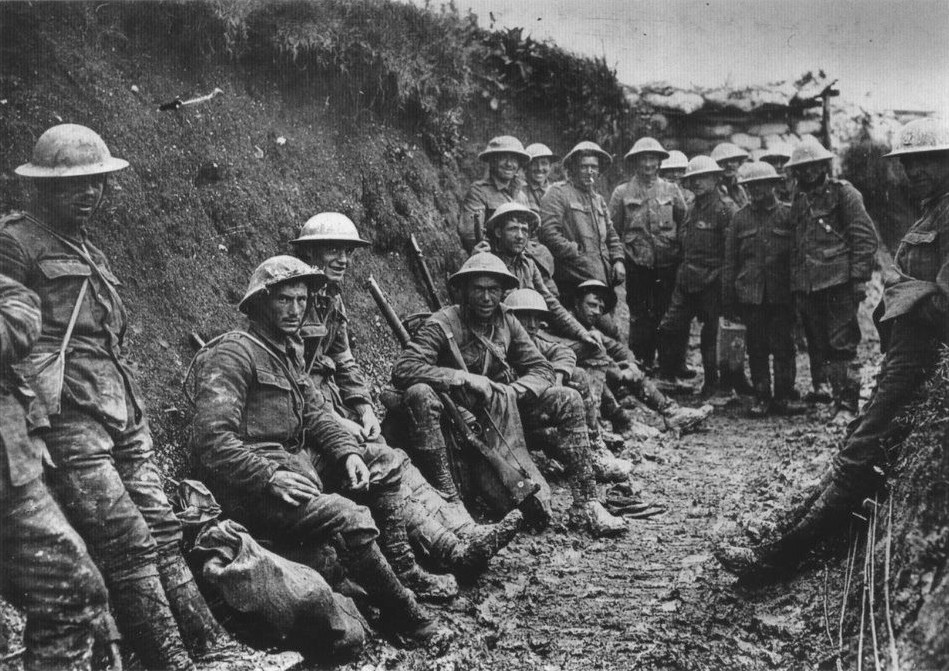
Royal Irish Rifles ration party, Somme, July 1916. Imperial War Museum Q 1. Public domain.
2.2
07Blood SacrificeMontera • 23″×84″
HOME FRONT
KEEPING
THE HOME
FIRES
THE HOME
FIRES
While men fought abroad, Ireland transformed. Women filled factories. Belgian refugees arrived by the thousand. German U-boats prowled Irish waters, sinking supply ships and threatening famine.
WOMEN AT WAR
Irish women served as nurses, ambulance drivers, and munitions workers. Others organized relief efforts — and a growing number joined the independence movement.
BELGIAN REFUGEES
Over 1,500 Belgian refugees settled in Ireland, establishing communities in Dublin and across the countryside.
UNRESTRICTED WARFARE
The sinking of the RMS Lusitania off the Old Head of Kinsale in May 1915 killed 1,198 passengers — many pulled from the water by Irish fishermen.

Bridie O’Mullane in Cumann na mBan uniform, c. 1918. Public domain.
2.3
08Keeping the Home FiresMontera • 23″×84″
DATA
BY THE
NUMBERS
NUMBERS
210,000+
IRISH SERVED IN BRITISH FORCES
49,400
IRISH DEAD IN THE GREAT WAR
Key Regiments
10th (Irish) Division • 16th (Irish) Division • 36th (Ulster) Division • Royal Dublin Fusiliers • Royal Munster Fusiliers • Connaught Rangers • Royal Irish Rifles
10th (Irish) Division • 16th (Irish) Division • 36th (Ulster) Division • Royal Dublin Fusiliers • Royal Munster Fusiliers • Connaught Rangers • Royal Irish Rifles
6
Victoria Crosses awarded to Irishmen on the first day of the Somme
REF
09By the NumbersMontera • 23″×84″
REBELLION & INDEPENDENCE
IN MEMORIAM
NAMES
OF THE
FALLEN
OF THE
FALLEN
49,400 sons and daughters of Ireland
These names represent the approximately 49,400 Irish men and women who lost their lives in the Great War. For decades, their sacrifice was forgotten — erased from a nation's memory by the politics of independence.
ROUND TOWER MEMORIAL
SCULPTURE ZONE
Island of Ireland Peace Park, Messines
SCULPTURE ZONE
Island of Ireland Peace Park, Messines
B1Names of the FallenBackdrop • 120″×89″
THE WESTERN FRONT
NO MAN’S
LAND
LAND
Between the trenches, nothing lived
Irish soldiers experienced the full horror of trench warfare: mud, gas, shellfire, and the constant presence of death. From Flanders to Gallipoli, they served with distinction — and paid a terrible price.
IMMERSIVE PROJECTION ZONE
Archival footage and audio
Archival footage and audio
B2No Man's LandBackdrop • 120″×89″
PART THREE
WAR
WITHIN
A WAR
WITHIN
A WAR
Easter 1916

Sackville Street after the Easter Rising, 1916. Public domain.
By 1916, Ireland is battered by war, divided by loyalty, and suffocating under British rule. The promise of Home Rule has faded. Now a desperate gamble for freedom plunges the island into its darkest hours. The Easter Rising explodes in Dublin — and nothing will ever be the same.
SECTION THREE
10War Within a WarIntro • 36″×84″
REVOLUTION
THE EASTER
RISING
RISING
APRIL 24
1916
1916
On Easter Monday, approximately 1,200 rebels seized key buildings across Dublin. Patrick Pearse read the Proclamation of the Irish Republic from the steps of the General Post Office. For six days, they held out against the might of the British Army.

The GPO from Abbey St., HQ of the Provisional Government. Thomas Johnson Westropp, 1916. CC0.
The Cost: 485 killed (260 civilians), 2,600+ wounded, central Dublin in ruins. The rebellion was crushed — but its legacy had only just begun.
Many Dubliners initially opposed the Rising. Soldiers' wives, whose husbands were fighting in France, threw refuse at captured rebels. Public opinion was about to shift dramatically.
3.1
11The Easter RisingMontera • 23″×84″
AFTERMATH
MARTYRS
& MEMORY
& MEMORY
Between May 3 and May 12, 1916, the British executed 16 leaders of the Rising by firing squad at Kilmainham Gaol. The executions shocked Ireland and transformed rebels into martyrs overnight.
Patrick PearseMay 3
Thomas MacDonaghMay 3
Thomas ClarkeMay 3
Joseph PlunkettMay 4
Edward DalyMay 4
William PearseMay 4
Michael O’HanrahanMay 4
John MacBrideMay 5
Con ColbertMay 8
Éamonn CeanntMay 8
Michael MallinMay 8
Seán HeustonMay 8
Seán Mac DiarmadaMay 12
James ConnollyMay 12
“If you strike us down now, we shall rise again.”
— PATRICK PEARSE
3.2
12Martyrs and MemoryMontera • 23″×84″
PART FOUR
A TERRIBLE
BEAUTY
IS BORN
BEAUTY
IS BORN
1918 – 1921

Island of Ireland Peace Park, Messines. Three pillars for the three Irish divisions. Public domain.
The war in Europe ends in 1918, but Ireland's struggle continues. Veterans return to a changed homeland. The War of Independence erupts, the Anglo-Irish Treaty grants partial freedom at the cost of partition, and civil war follows. The freedom so long sought is both a triumph and a tragedy — “a terrible beauty” born from sacrifice and sorrow.
SECTION FOUR
13A Terrible Beauty is BornIntro • 36″×84″
CRISIS
THE
CONSCRIPTION
CRISIS
CONSCRIPTION
CRISIS
1918
In April 1918, desperate for manpower, Britain extended conscription to Ireland. The response was electric: nationalists, unionists, the Catholic Church, trade unions, and Sinn Féin united in opposition for the first time. A massive anti-conscription pledge was signed by hundreds of thousands.
“We deny the right of the British Government to enforce compulsory service in this country.”
— ANTI-CONSCRIPTION PLEDGE, 1918
Conscription was never enforced in Ireland, but the crisis shattered any remaining loyalty to Britain and propelled Sinn Féin to a landslide victory in the December 1918 elections.

Cumann na mBan protest, Mountjoy Prison, 1921. National Library of Ireland. Public domain.
4.1
14The Conscription CrisisMontera • 23″×84″
INDEPENDENCE
FRACTURED
PEACE
PEACE
1919
War of Independence begins. The Irish Republican Army wages guerrilla warfare against British forces. Ambushes, assassinations, and reprisals devastate the countryside.
1920
Black and Tans arrive. British auxiliary forces unleash a campaign of terror. Bloody Sunday sees 14 killed in Dublin on a single day.
1921
Anglo-Irish Treaty. Grants dominion status to 26 counties as the Irish Free State. Six northern counties remain under British rule — Ireland is partitioned.
1922
Civil War. Pro-Treaty and anti-Treaty forces turn on each other. Former comrades become enemies. Michael Collins is killed in an ambush.
The enemy was not only the Central Powers or the British Empire — but sometimes fellow Irish. Former Great War comrades found themselves on opposite sides of a new and more bitter conflict.
4.2
15Fractured PeaceMontera • 23″×84″
LEGACY
REMEMBERANCE
For decades after independence, Ireland's Great War veterans were forgotten — their service seen as disloyal to the new state. Remembrance was private, shameful, hidden. It would take nearly a century for Ireland to reclaim their story.
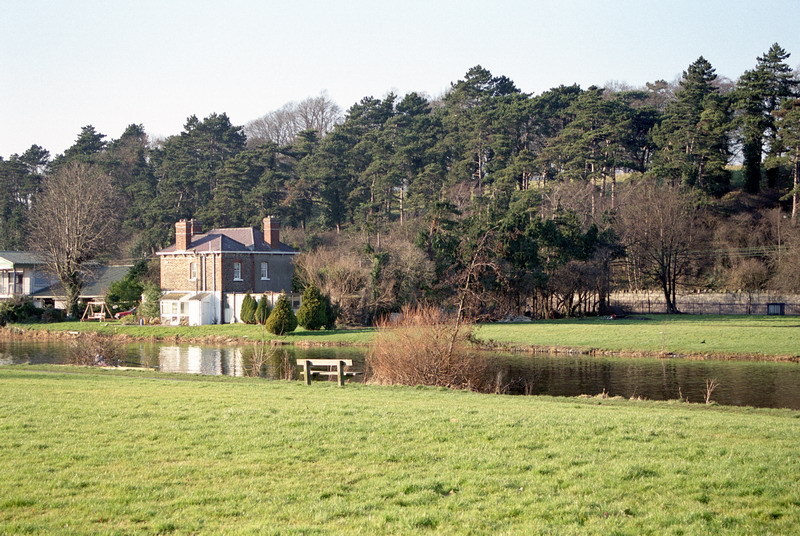
Irish National War Memorial Gardens, Islandbridge, Dublin. Designed by Sir Edwin Lutyens. Photo: Maksym Kozlenko, CC BY-SA 3.0.
Island of Ireland Peace Park
Dedicated 1998 by Queen Elizabeth II, President Mary McAleese, and King Albert II of Belgium
National War Memorial Gardens
Islandbridge, Dublin — designed by Edwin Lutyens, completed 1939, neglected for decades
Glasnevin Cemetery Wall
Names of all Irish war dead inscribed in 2014 for the centenary
Royal Dublin Fusiliers Assoc.
Founded 1997, led the grassroots movement to remember Ireland's forgotten soldiers
The story of reconciliation is still being written today.
4.3
16RemembranceMontera • 23″×84″
NEW PANELS — ZONE-AWARE
PERSONAL
LETTERS
FROM THE
FRONT
FROM THE
FRONT
Soldiers wrote home constantly — to wives, mothers, sweethearts. These letters were lifelines, connecting the trenches of France to the fields of Ireland. Censored by officers, they reveal what men chose to share and what they could not bear to say.
PTE. JAMES BRENNAN • 16TH (IRISH) DIVISION • 1916
“Dear Mary — Do not worry yourself. The food is poor but the lads are good. We think of home every hour. Kiss the children for me. I will be back before you know it.”
— killed at Guillemont, 3 September 1916
CPL. THOMAS O’NEILL • ROYAL DUBLIN FUSILIERS • 1915
“The noise never stops. A man cannot think, cannot sleep. We hold our ground because there is nothing else to do. Ireland feels a thousand years away.”
— survived, returned to Dublin 1919
LETTERS ARE REPRESENTATIVE COMPOSITES
5.1
19Letters From the FrontMontera • 23″×84″
FORMATIONS
THE IRISH
REGIMENTS
REGIMENTS
Three Irish divisions served on the Western Front, each carrying the political identity of the Ireland that raised it. They fought with distinction — and against each other's vision of Ireland's future.
10
10TH (IRISH) DIVISION
Formed 1914. First Irish division in action. Fought at Gallipoli, Salonika, and Palestine. A mix of nationalists and regulars, devastated at Suvla Bay.
16
16TH (IRISH) DIVISION
Raised from Redmond’s National Volunteers. Fought at the Somme, Messines, and Langemarck. Heavy losses at Guillemont and Ginchy, September 1916.
36
36TH (ULSTER) DIVISION
Formed from the Ulster Volunteer Force. Suffered 5,500 casualties on 1 July 1916 at Thiepval. The bloodiest day in Ulster’s history.
THREE DIVISIONS, ONE ISLAND, NO PEACE
5.2
20The Irish RegimentsMontera • 23″×84″
AFTERMATH
WOUNDS
UNSEEN
UNSEEN
They called it “shell shock” — the trembling, the nightmares, the thousand-yard stare. Thousands of Irish soldiers returned home with invisible wounds that no one understood and no one wanted to see.
“He came back a different man. He would sit by the fire for hours, saying nothing. The children were afraid of him. The neighbours said he was mad.”
WIFE OF A RETURNED SOLDIER, CO. CORK
SHELL SHOCKUncontrollable tremors, paralysis, and mutism caused by prolonged bombardment
NIGHTMARESReliving the trenches every night; many never slept soundly again
SILENCEUnable to speak of what they had seen; families never learned the truth
ERASUREIn the new Irish Free State, their service was a source of shame, not honour
ACCOUNTS ARE REPRESENTATIVE COMPOSITES
5.3
21Wounds UnseenMontera • 23″×84″
INFOGRAPHIC PANELS
INFOGRAPHIC
IRELAND
1912 – 1923
1912 – 1923
WAR
POLITICS
REBELLION
1912
Third Home Rule Bill introduced. Ulster unionists sign the Covenant. POLITICS
1913
UVF & Irish Volunteers formed. Both sides arm for civil war.
1914
WWI declared. Home Rule suspended. 30,000 enlist by December. WAR
1915
Gallipoli. 10th Division devastated at Suvla Bay. Lusitania sunk off Cork. WAR
1916
Easter Rising in April. Battle of the Somme in July. 16 leaders executed. REBELLION WAR
1917
Messines Ridge. 16th & 36th fight side by side. Sinn Féin gains power. WAR
1918
Conscription Crisis. Armistice Nov 11. Sinn Féin wins 73 seats. POLITICS
1919
War of Independence begins. Dáil Éireann convenes. REBELLION
1920
Black and Tans. Bloody Sunday. Government of Ireland Act partitions island. REBELLION
1921
Anglo-Irish Treaty. Irish Free State created. Six counties remain British. POLITICS
1922
Civil War. Pro- vs anti-Treaty. Collins killed in ambush. REBELLION
1923
Civil War ends. Free State consolidated. WWI veterans forgotten. POLITICS
INF.1
22Ireland 1912–1923Montera • 23″×84″
INFOGRAPHIC
THREE
DIVISIONS
DIVISIONS
Ireland raised three full divisions for the Great War — each carrying the politics of the island into battle.
10
10TH (IRISH) DIVISION
Formed August 1914 • Mixed nationalist & regular
13,000
RAISED
9,363
CASUALTIES
4
VICTORIA CROSSES
72%
CASUALTY RATE
Gallipoli (Suvla Bay) • Salonika • Palestine • Egypt
16
16TH (IRISH) DIVISION
Formed Sept 1914 • Redmond’s National Volunteers
15,000
RAISED
11,000
CASUALTIES
3
VICTORIA CROSSES
73%
CASUALTY RATE
Somme (Guillemont, Ginchy) • Messines • Langemarck • Passchendaele
36
36TH (ULSTER) DIVISION
Formed Sept 1914 • Ulster Volunteer Force
16,000
RAISED
12,600
CASUALTIES
4
VICTORIA CROSSES
79%
CASUALTY RATE
Somme (Thiepval) • Messines • Langemarck • Cambrai
32,963
TOTAL DIVISIONAL CASUALTIES
INF.2
23Three DivisionsMontera • 23″×84″
INFOGRAPHIC
WHERE
IRELAND
FOUGHT
IRELAND
FOUGHT
IRISH CASUALTIES BY ENGAGEMENT
Gallipoli1915–164,300+
SommeJul–Nov 191612,000+
MessinesJun 19174,500+
PasschendaeleAug–Nov 19176,200+
CambraiNov 19172,100+
Spring OffensiveMar 19185,800+
34,900+
TOTAL IRISH BATTLE CASUALTIES
INF.3
24Where Ireland FoughtMontera • 23″×84″
INFOGRAPHIC
IRELAND’S
WAR IN
NUMBERS
WAR IN
NUMBERS
210K+
TOTAL ENLISTED
49,400
KILLED
~100K
WOUNDED
37
VICTORIA CROSSES
77%
SURVIVED
23%
KILLED
RECRUITMENT BY PROVINCE
6
VICTORIA CROSSES AT GALLIPOLI ALONE
More than any other national contingent in the campaign
INF.4
25Ireland’s War in NumbersMontera • 23″×84″
INFOGRAPHIC
THE COST
OF WAR
OF WAR
IRISH DEAD BY YEAR
CASUALTIES BY DIVISION
49,400
TOTAL IRISH WAR DEAD
COMPARED TO OTHER DOMINIONS
Canada
Ireland
Australia
New Zealand
South Africa
Ireland’s dead per capita exceeded all dominions except New Zealand. Unlike others, their sacrifice was erased from national memory for decades.
INF.5
26The Cost of WarMontera • 23″×84″