Work
in His Own Words
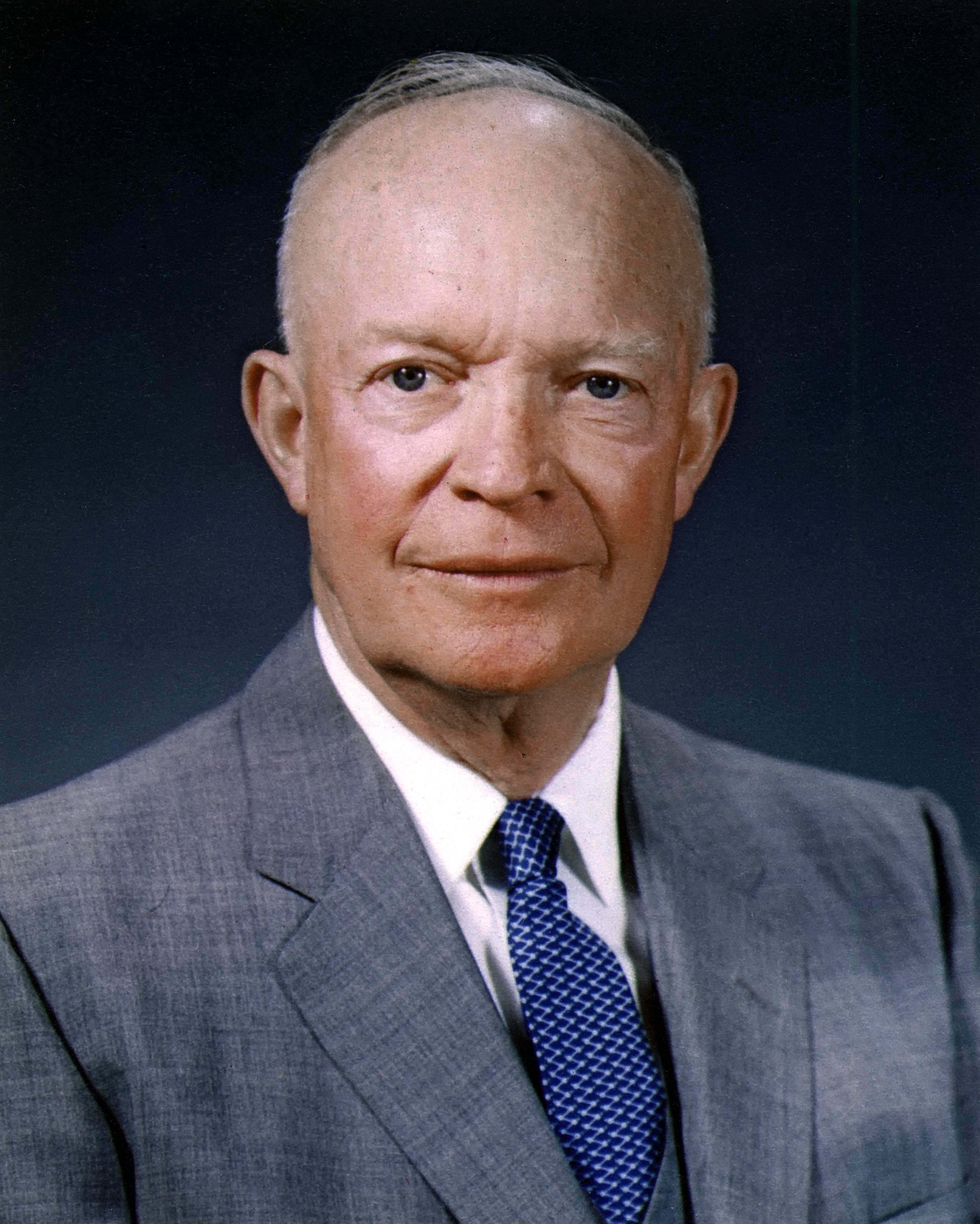
Using Eisenhower's own list identifying his administration's top accomplishments, this exhibit showcases letters and documents that highlight Eisenhower's Work.
Library
Five years after leaving office, Eisenhower wrote to his friend William Ewald listing 23 accomplishments of his presidency—entirely from memory. This remarkable document reveals what Ike himself considered the most important achievements of his eight years as the nation's 34th president.
The list ranges across every dimension of presidential leadership: from ending the Korean War and launching the Space Age, to building the Interstate Highway System and advancing civil rights. Taken together, these 23 items paint a portrait of a presidency far more consequential than its quiet reputation suggests.
This exhibit uses Eisenhower's own list as its framework, organized into six thematic sections that reveal the breadth and depth of his presidential legacy.
Works
Infrastructure
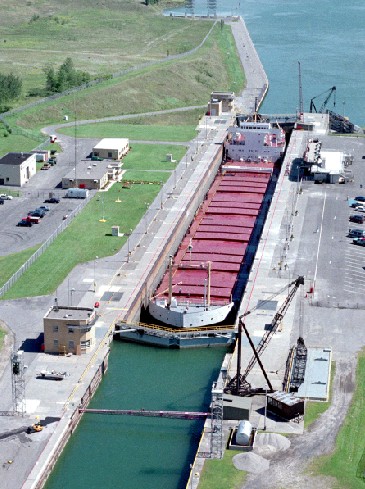
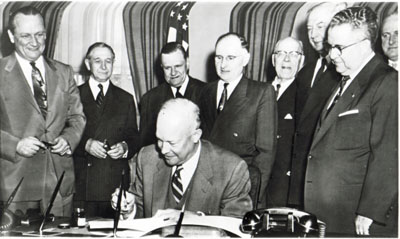
Both the U.S.-Canadian St. Lawrence Seaway project and the Interstate Highway System are standouts on Eisenhower's list. Inspired by his 1919 Transcontinental Motor Convoy and his knowledge of the German Autobahn, Eisenhower signed the National Interstate and Defense Highways Act in June 1956.
The largest public works program in United States history
Works
Inspired by the 1919 Transcontinental Motor Convoy and the German Autobahn, Eisenhower signed the National Interstate and Defense Highways Act in June 1956—the largest public works program in American history.
System
Inspired by the 1919 Transcontinental Motor Convoy and the German Autobahn, the Federal-Aid Highway Act remains the largest public works project in American history, fundamentally reshaping travel and the economy.
Lawrence
Seaway
After decades of failed attempts, Eisenhower signed the Wiley-Dondero Act in 1954, authorizing U.S. participation in the massive St. Lawrence Seaway project. Opened in 1959, it connected the Great Lakes to the Atlantic Ocean, transforming the economic geography of North America.
Works
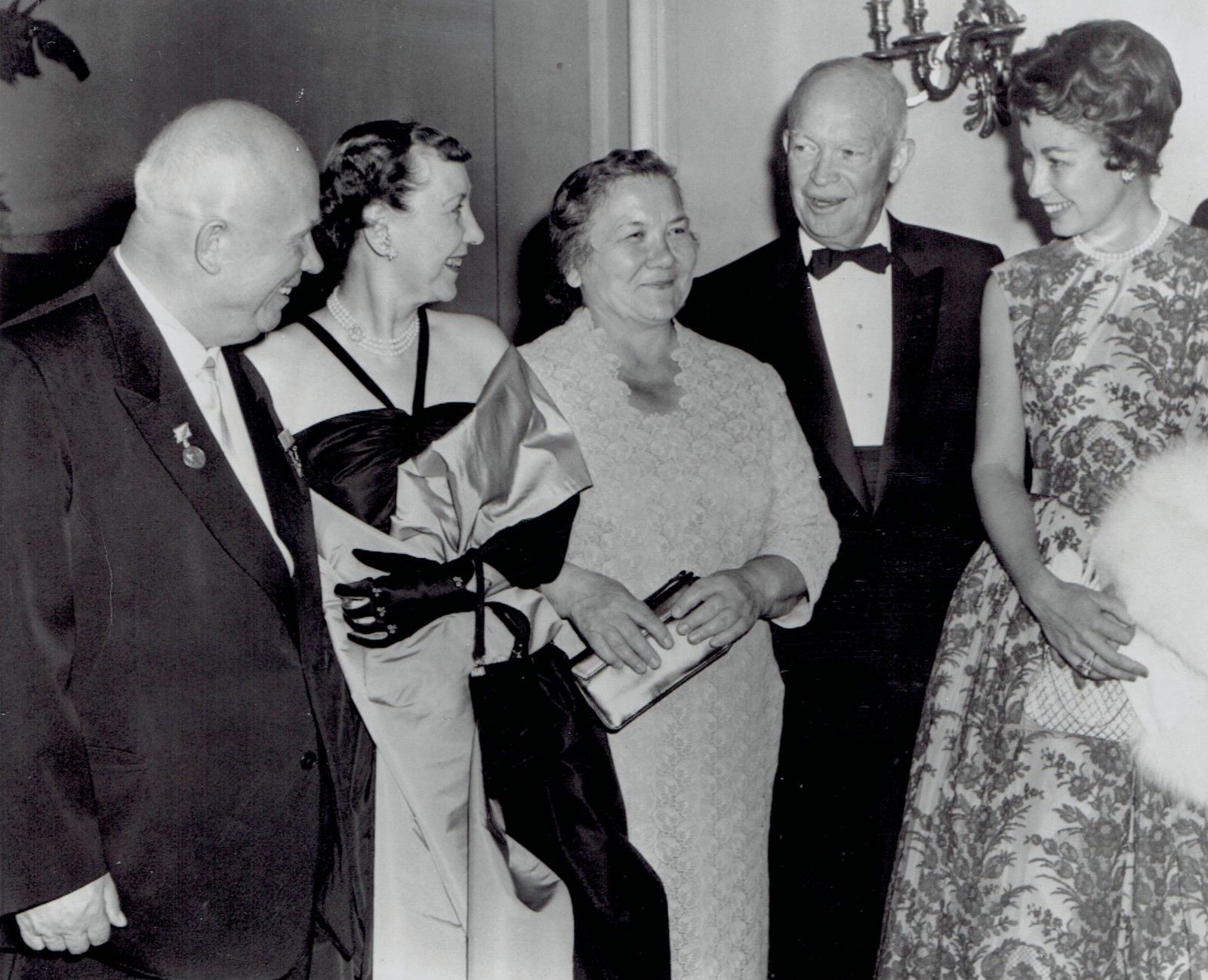
Eisenhower's time in office focused on protecting America from communist expansion while avoiding war. He believed all nations needed to enjoy peace and prosperity, enhanced through Goodwill Tours and new programs abroad—USIA, Food for Peace, and People to People International.
Works
Eisenhower focused on protecting America from communist expansion while avoiding war, using Goodwill Tours and new programs abroad—USIA, Food for Peace, and People to People International.
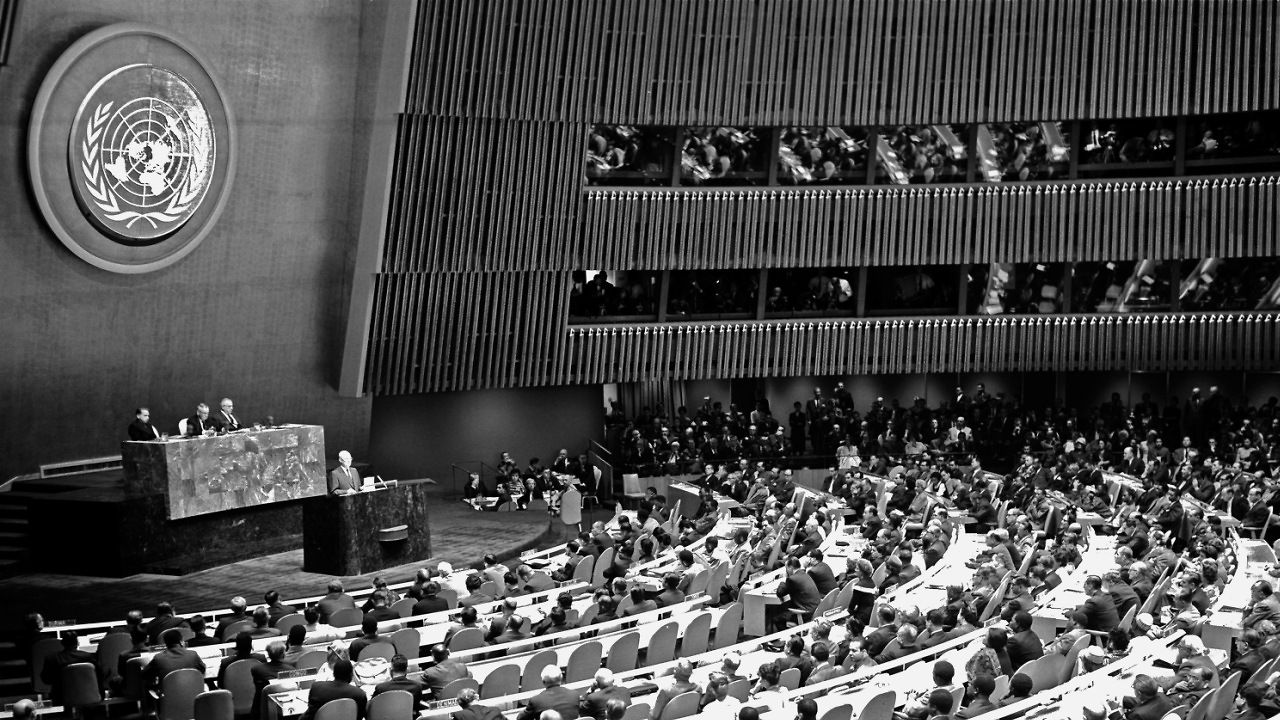
Peace
December 8, 1953
Before the United Nations General Assembly, Eisenhower proposed that the world's nuclear powers divert fissile material from weapons to peaceful purposes. The speech launched international cooperation in nuclear energy and led to the creation of the International Atomic Energy Agency.
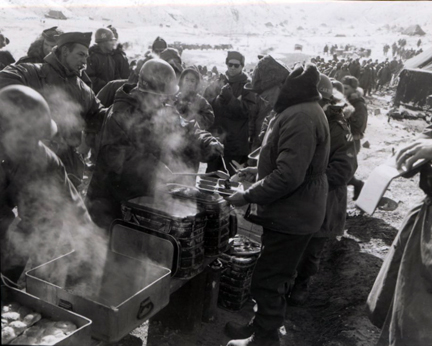
in Korea
Fulfilling his most important campaign promise, Eisenhower traveled to Korea in December 1952 and within months negotiated the armistice that ended the war. For the remainder of his presidency, not a single American soldier was killed in combat anywhere in the world.
Works
& Education
Works
Civil Rights
Safety
Net
Eisenhower dramatically expanded the Social Security system, extending coverage to over ten million additional Americans including self-employed farmers, domestic workers, and state and local government employees. He also signed the Kerr-Mills Act, laying the groundwork for Medicare.
Works
Under Eisenhower's leadership, the federal government was modernized and expanded to meet the challenges of the postwar era. The creation of HEW consolidated health, education, and social welfare programs. Alaska and Hawaii joined as the 49th and 50th states, completing the map of America as we know it today.
Works
The creation of HEW, admission of Alaska and Hawaii, responsible fiscal policy, and DOD reorganization modernized the federal government for the postwar era.
Shining Sea
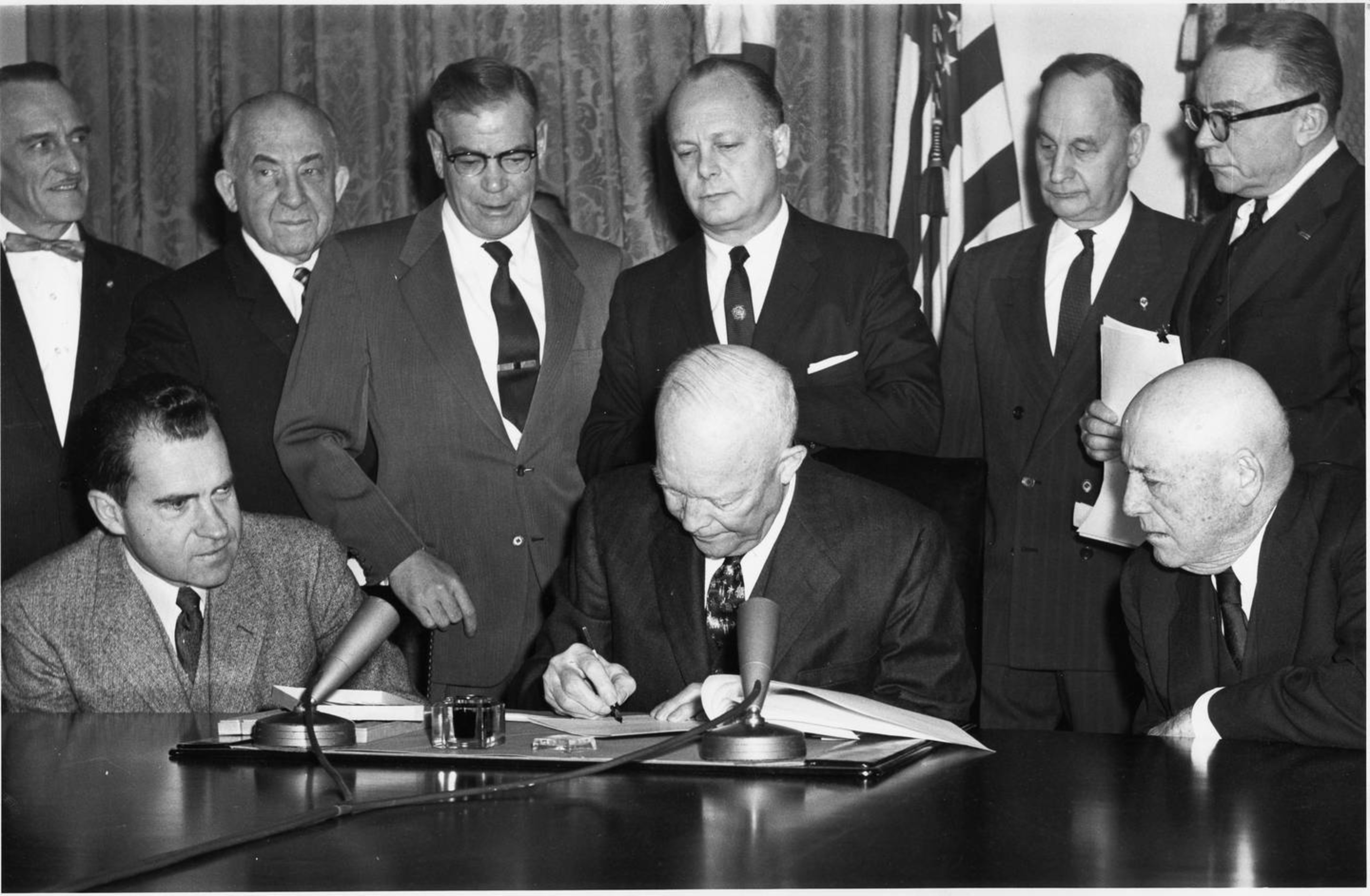
In a single year, Eisenhower signed the proclamations admitting both Alaska and Hawaii into the Union—completing the fifty states of America as we know them today.
Government
Eisenhower created the Department of Health, Education, and Welfare in 1953—the first new cabinet-level department in 40 years. He also reorganized the Department of Defense, establishing the unified command structure that remains in place today and strengthening civilian oversight of the military.
Works
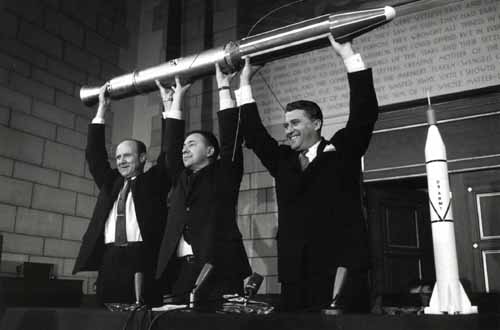
Eisenhower established both the Advanced Research Projects Agency (ARPA) and the National Aeronautics and Space Administration (NASA) as civilian agencies. Under his watch, America successfully launched Explorer I and SCORE, selected its first class of astronauts, and achieved the successful orbit of an American astronaut.
Works
Eisenhower established NASA and ARPA as civilian agencies, launched Explorer I, selected the Mercury Seven astronauts, and set America on course for the stars.
the Space
Age
After Sputnik shocked the nation, Eisenhower responded not with panic but with strategic vision. He established NASA as a civilian agency, created ARPA for advanced research, and launched the programs that would carry Americans to the Moon.
Works
Deterrence
The Eisenhower Administration fundamentally reshaped American defense policy with a strategy based on nuclear deterrence and the containment of Communist ideology. A strong defense program created the strength to support diplomatic efforts like the "Atoms for Peace" program.
Works
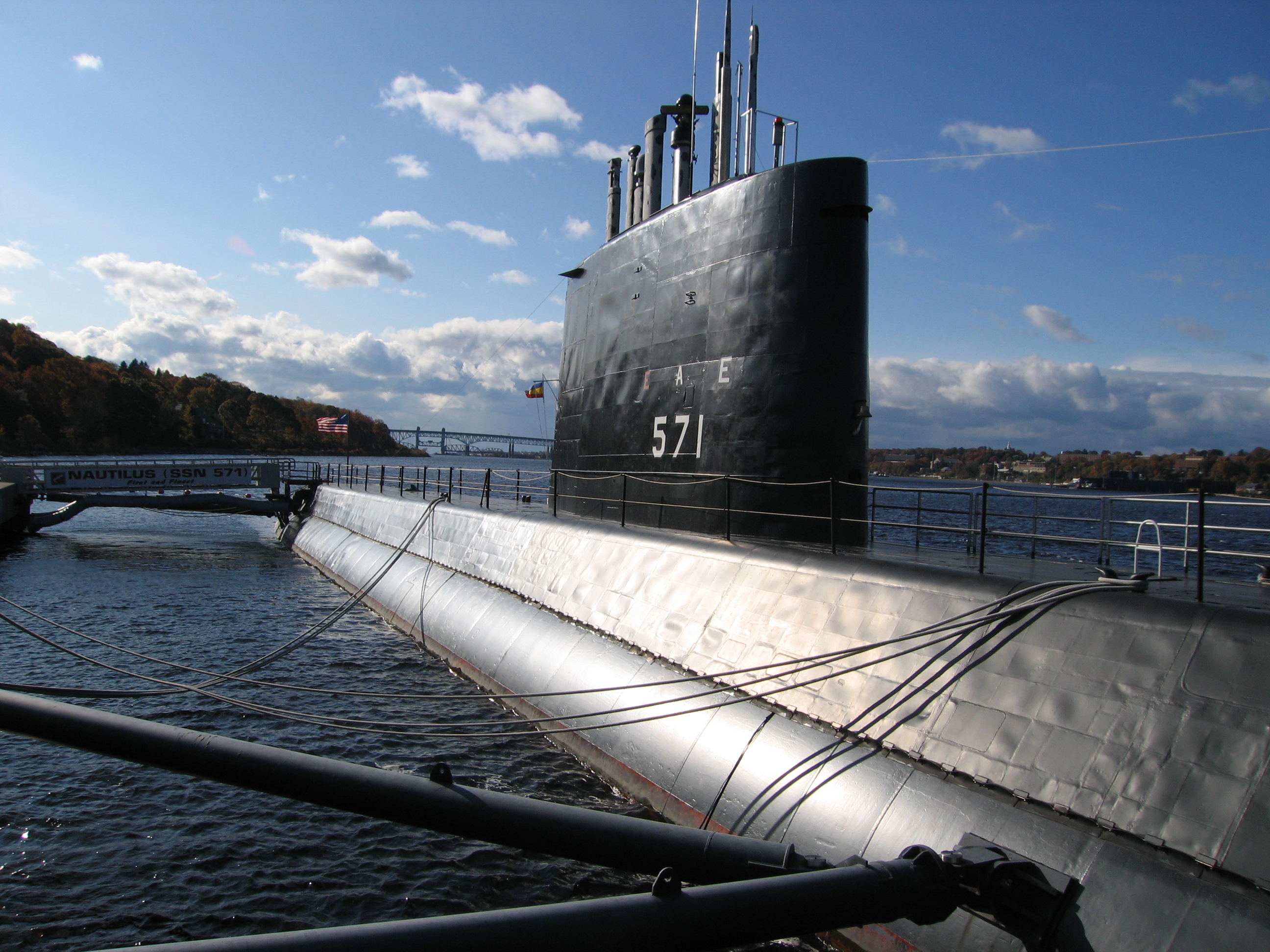
The Eisenhower Administration reshaped American defense with a strategy based on nuclear deterrence—the nuclear triad of land, sea, and air forces.
Service
Eisenhower championed the revolutionary Polaris missile submarine program, creating an virtually undetectable nuclear deterrent. The USS Nautilus, the world's first nuclear-powered submarine, transmitted its historic message "Underway on nuclear power" in 1955. By 1960, Polaris submarines could launch ballistic missiles while submerged anywhere in the world's oceans.
of Action
Who Changed America
From the Interstate Highway System to the Space Age, from civil rights to nuclear deterrence, Eisenhower's eight years in office reshaped the nation and the world. His leadership style—calm, deliberate, and strategic—produced results that still define American life today.
What makes Eisenhower's list remarkable is not just the scope of these achievements, but that he accomplished them while maintaining peace, balancing the budget, and working with a Congress controlled by the opposing party for six of his eight years in office.